
The ResilienceBuilder® Model.
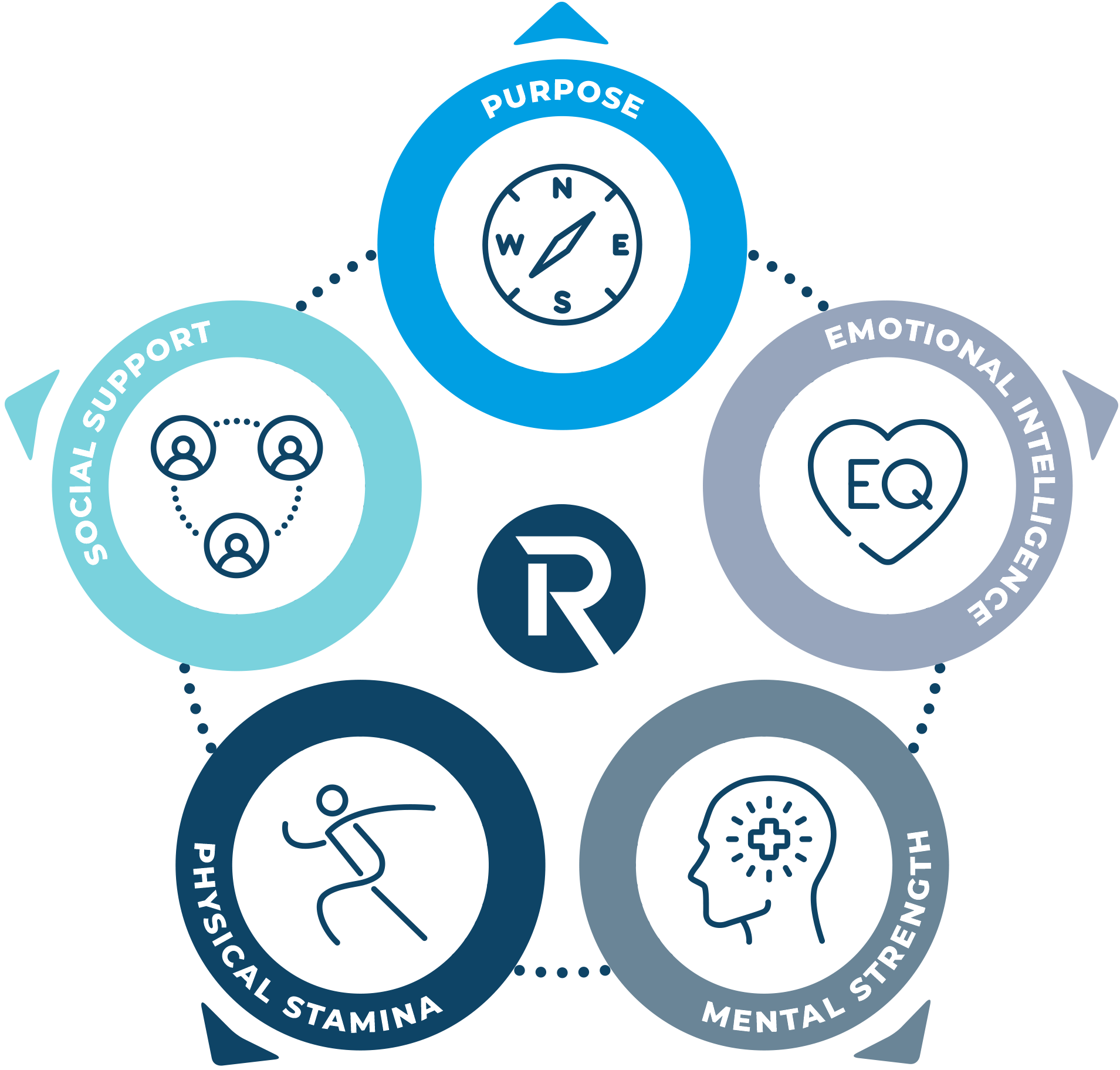
The ResilienceBuilder® Model was developed following four years of extensive research into the factors associated with highly resilient people. It breaks resilience into five measurable facets: mental strength, purpose, physical stamina, emotional intelligence and social support, with 30 key sub-facets beneath them that give a detailed, personalised picture.
Most resilience models focus on just two or three aspects of resilience. The ResilienceBuilder® Model treats resilience as five distinct areas that can be measured and developed, replacing guesswork with a clear understanding of what to focus on.
Designed to increase the impact of training and coaching
Resilience training is more effective when the causes of low resilience are identified and targeted. That is why the ResilienceBuilder® model was designed with the outcome in mind — with specific, actionable recommendations for individuals and groups to build their resilience.
A holistic approach to resilience
The ResilienceBuilder® Model is based on five facets that can be measured and built. Each is a distinct part of how a person holds up under sustained pressure; strength in one does not cover weakness in another.
01. Mental Strength
Cognitive habits that keep people clear, focused and adaptable when pressure rises.
02. Purpose
The why that sustains effort and speeds recovery.
03. Physical Stamina
Work/life balance, sleep, recovery, exercise and energy management, the foundation the rest stands on.
04. Emotional Intelligence
Self-awareness and empathy under load.
05. Social Support
The relationships that help us navigate challenges.
Why resilience matters: stress versus performance
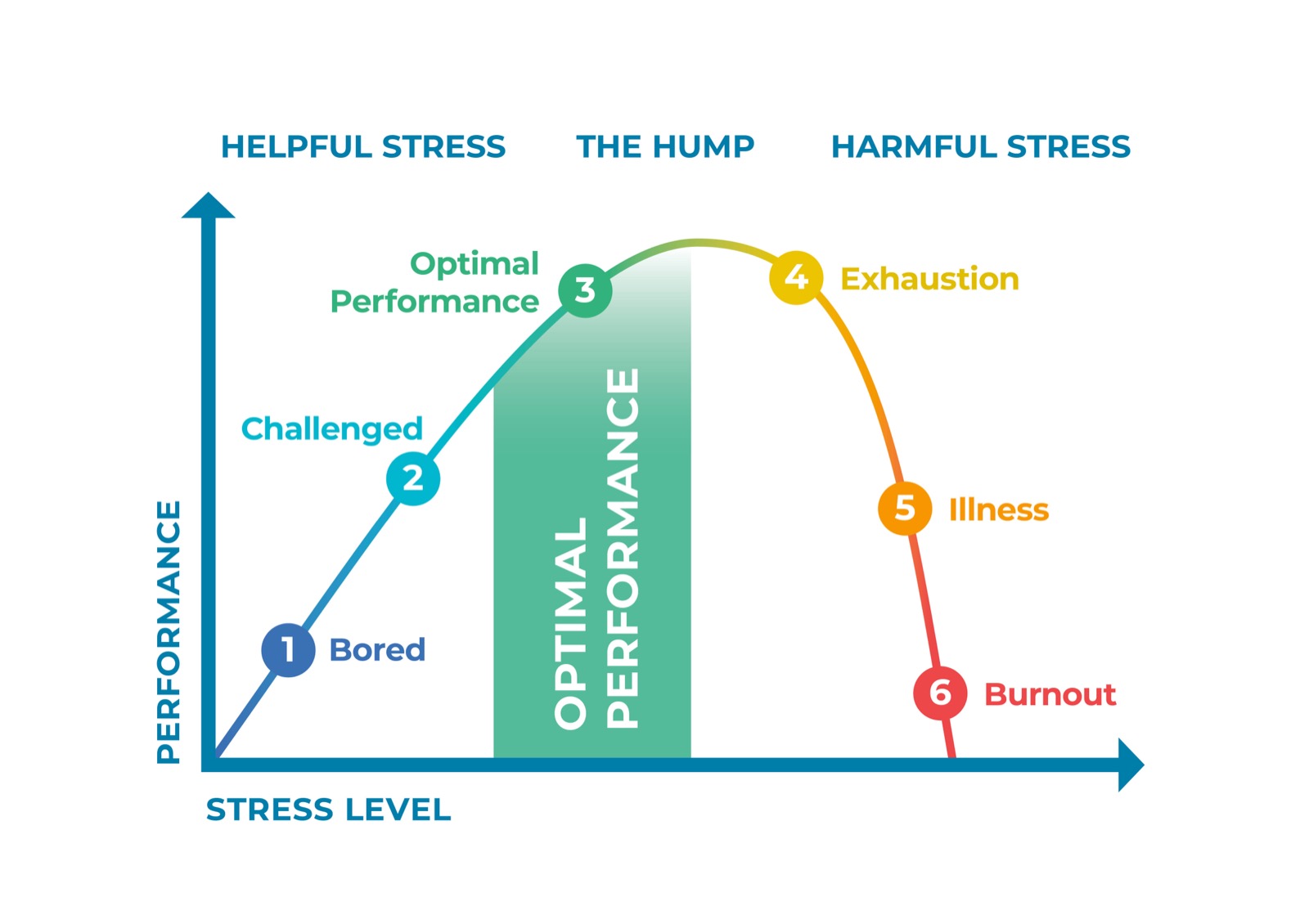
A degree of pressure is helpful: it moves people from bored to challenged to optimal performance. Past a certain point, though, the same pressure becomes harmful, tipping into exhaustion, illness and burnout. Resilience is what widens the optimal zone and slows the slide into harmful stress.
30 sub-facets for a detailed picture
Beneath the five facets sit 30 key sub-facets of resilience and effective stress management, which provide a detailed picture of individual strengths and development opportunities, with personalised, actionable insights.
Evidence-based, data-driven model
ResilienceBuilder® is built on a foundation of established research and designed to make resilience measurable. The assessment evaluates 30 evidence-based factors that influence resilience and an individual’s ability to sustain performance under pressure and change. It has undergone reliability and validity testing to ensure consistent and meaningful results. By combining data-driven insights with targeted recommendations, ResilienceBuilder® helps individuals, teams and organisations focus on the areas that will have the greatest impact on increasing their resilience.
Start a conversation
What is the ResilienceBuilder® Model?
It is a framework, developed following four years of research into the factors associated with highly resilient people, that breaks resilience into five measurable facets: mental strength, purpose, physical stamina, emotional intelligence and social support. Beneath them sit 30 key sub-facets that give a detailed picture of individual strengths and development opportunities.
Why five facets?
Because resilience is not one thing. Most resilience models focus on just two or three aspects. Two people can both struggle under pressure for completely different reasons: one is not recovering physically, another has lost their sense of purpose. Five facets show exactly where someone is strong and where to focus, instead of treating resilience as a single vague quality.
Is the model evidence-based?
Yes. ResilienceBuilder® is built on a foundation of established research and designed to make resilience measurable. The assessment evaluates 30 evidence-based factors that influence resilience and has undergone reliability and validity testing to ensure consistent, meaningful results.
How is the model used in practice?
It starts with the Assessment, which scores a person or team across all five facets and 30 sub-facets. The result shows which areas are strong and which are under strain, and that picture shapes the training, workshops or coaching that follow, so the work targets what someone actually needs.